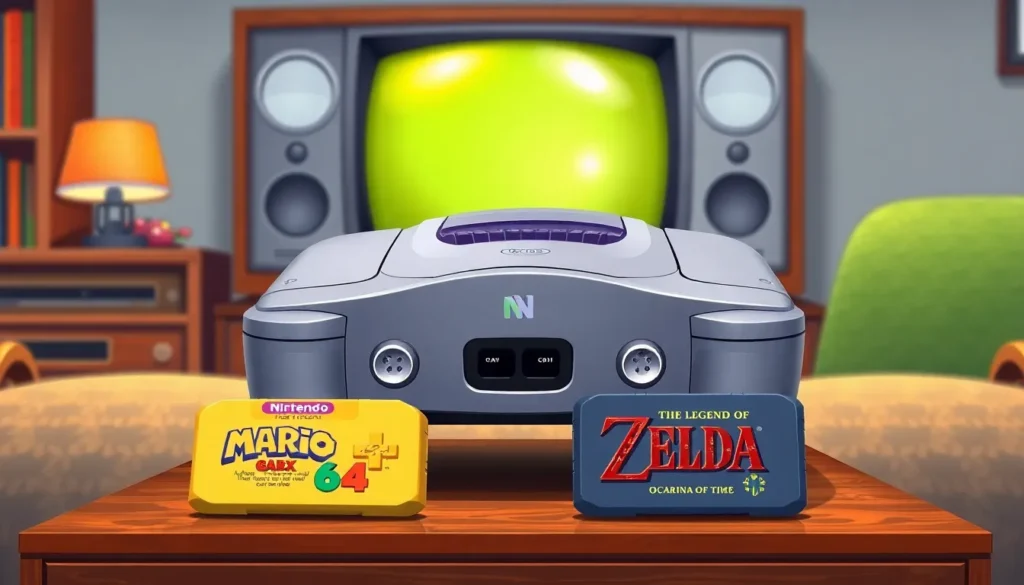
When the Nintendo 64 hit the shelves in 1996, it was like a comet crashing into the gaming universe. Gamers everywhere were ready to trade in their old consoles for a taste of 3D adventure. But before they could dive into the vibrant worlds of Mario and Zelda, they had to face the ultimate question: what was the original price of this iconic console?
Fast forward to today, and that price tag sparks nostalgia and curiosity. Was it a steal or a splurge? Understanding the original cost of the Nintendo 64 not only reveals the value of gaming history but also highlights how far technology has come. So grab your controller, dust off that old cartridge, and let’s take a trip down memory lane to uncover the financial tale behind this legendary console.
Nintendo 64 Original Price Overview
The Nintendo 64 debuted in 1996, captivating gamers with its innovative technology. Understanding its original price offers valuable context about the gaming landscape at the time.
Launch Price in the US
The launch price for the Nintendo 64 in the United States was $199.99. This pricing positioned the console competitively against other gaming systems. Gamers embraced its affordability alongside 3D graphics and multiplayer capabilities. With four controller ports, friends could enjoy gaming together, enhancing the value proposition. The excitement surrounding the launch contributed to its strong sales figures, with over 32 million units sold globally by 2003.
Price Adjustments Over Time
The Nintendo 64 experienced various price adjustments after its initial release. Retailers offered discounts during holiday sales and promotional events. Prices dropped over the years, particularly as newer consoles entered the market. By the early 2000s, the console’s price had reduced to around $79.99. Collectors now seek out the original models, often commanding higher prices due to nostalgia and rarity. Understanding these changes illustrates the Nintendo 64’s enduring legacy in gaming history.
Factors Influencing the Original Price
Multiple elements shaped the original price of the Nintendo 64, impacting its positioning in the gaming market.
Market Competition
Competitors played a significant role in determining the console’s price. When the Nintendo 64 launched at $199.99, it faced strong contenders like the Sony PlayStation and Sega Saturn. Each competitor offered unique features, attracting diverse gaming audiences. Market dynamics prompted Nintendo to ensure its price remained competitive, particularly during the critical launch window. Discounts during key shopping periods further influenced perceived value, appealing to budget-conscious consumers. Successful marketing strategies also highlighted the console’s outstanding graphics and multiplayer functionality, which helped bolster sales against competing consoles.
Technology Advances
Technological innovations significantly impacted the original price. The Nintendo 64 showcased cutting-edge 3D graphics, which set a new standard for gaming. Advancements in hardware design contributed to the unique gameplay experience, justifying its price point. Production costs related to these technologies affected the pricing strategies employed at launch. As resources for developing 3D capabilities improved, Nintendo adapted its pricing over time to reflect technological advancements. Ultimately, evolving technology and the demand for immersive gaming experiences influenced pricing adjustments and consumer interest in the console.
Collectible Value Today
The Nintendo 64 has gained significant collectible value today. Collectors focus on original models, often fetching higher prices due to rarity and nostalgia.
Current Market Trends
Current market trends indicate a steady appreciation in the value of the Nintendo 64. Listings on auction sites show complete in-box systems averaging around $200-$300. Prices fluctuate based on condition and included accessories. Many collectors seek out systems in pristine condition, further driving up values. High demand exists for games like “The Legend of Zelda: Ocarina of Time” and “Super Mario 64,” which also claim impressive resale values, often exceeding $100 for complete copies. The nostalgia factor heavily influences these market trends, as gamers reminisce about their childhood experiences.
Rare Variants and Exclusives
Rare variants and exclusives greatly enhance the collectible appeal of the Nintendo 64. Limited editions, such as the “Gold Controller” and various translucent models, attract particular interest from collectors. These editions often command prices of $500 or more, depending on condition and completeness. Special releases tied to specific games hold value as well; for instance, “Donkey Kong 64” bundles can fetch high prices due to their limited production. Completing a collection of exclusive titles significantly boosts overall value. The uniqueness of these items plays a crucial role in their desirability among gaming enthusiasts.
The Nintendo 64’s original price of $199.99 marked a pivotal moment in gaming history. Its competitive pricing combined with groundbreaking technology allowed it to capture the hearts of gamers worldwide. As time passed the console’s value evolved reflecting its status as a cherished collectible. Today’s market showcases a strong demand for original models and iconic games, underscoring the lasting impact of the Nintendo 64. This beloved system not only shaped the gaming landscape but also left an indelible mark on the nostalgia of countless players.